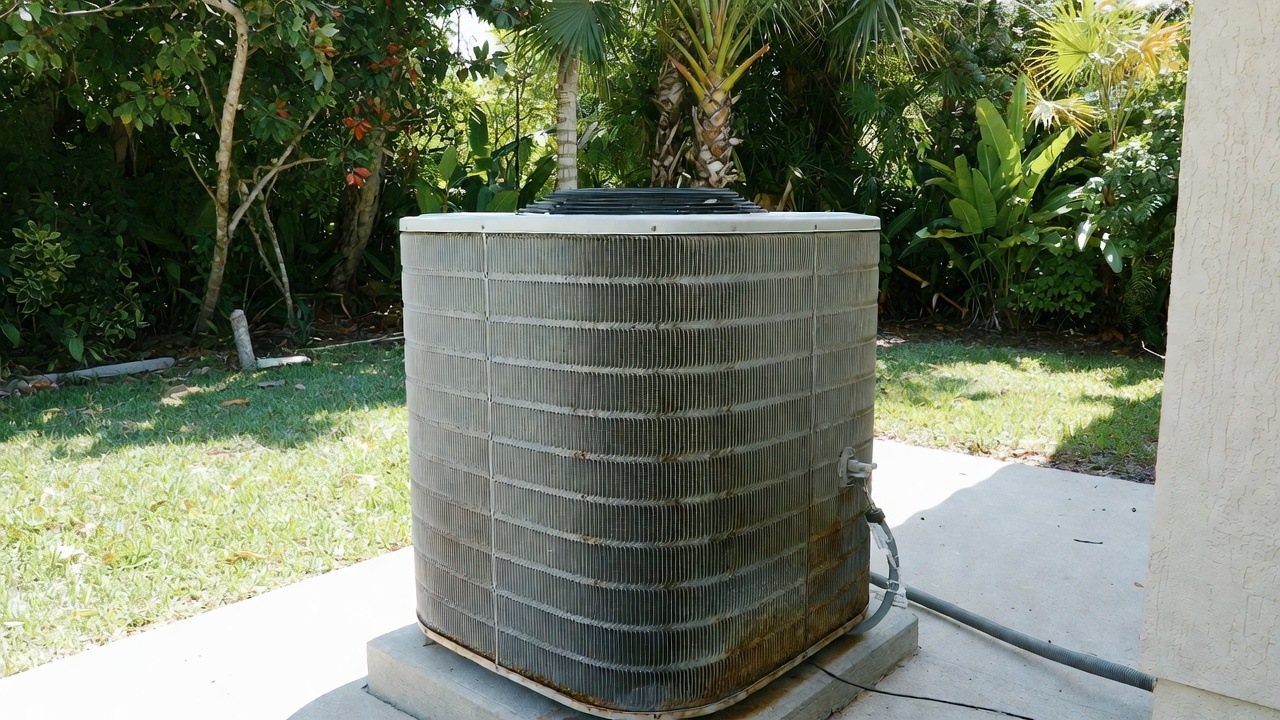
Florida house, old AC talk
Repair vs Replace Your Florida AC (Especially at 16+ Years)
ENERGY STAR says consider replacing a heat pump or air conditioner when it is more than 10 years old, and also when repairs keep stacking while bills climb. Florida systems run hard most of the year, so a 16-year-old box is deep into that talk. This page is a slow decision helper: age, repair quote, humidity comfort, and refrigerant. You type the numbers. Just a blog helper in the tonnagecalc.com set. Not a quote from a contractor.
Decision helper (you fill the numbers)
The “$5,000 rule” below is a common planning shortcut. It is not an ENERGY STAR formula and not a law. Multiply age × repair quote. Over about $5,000, many people lean replace. Under it, repair can still win, especially on a one-time, cheap fix.
-
Repeat repairs lately Two or more paid visits in the last couple cooling seasons, or the same part failed twice.
-
House feels sticky or uneven Cold and clammy rooms, short cycles, or Fan On is the only thing keeping humidity down.
-
Electric bill climbed with the same habits Same thermostat habits, worse bills. ENERGY STAR ties rising bills + frequent repairs to “consider replace.”
-
Planning to stay in this house a while If you’re moving soon, a cheap repair can bridge you. Staying long changes the math.
Neighbor tip. A capacitor or drain clear on a decent system is not the same as a compressor or coil on a 16-year-old box. Ask the tech what failed and what it costs. Ask whether indoor and outdoor would both change if you replace.
What ENERGY STAR actually says
On “When is it time to replace?”, ENERGY STAR lists cues that push you toward a pro conversation about change. Not an order to rip the system out today:
- Heat pump or air conditioner more than 10 years old: consider an ENERGY STAR labeled replacement, installed correctly.
- Frequent repairs and energy bills going up.
- Some rooms too hot or too cold (could be equipment, ducts, or insulation).
- Humidity problems in summer.
- Noisy system, excess dust from leaky ducts, and other whole-home signs.
ENERGY STAR’s older “Repair or Replace? YOU DECIDE” tip sheet is even more blunt on age. Keep repairing if the AC or heat pump is under 10 years with a good service record. Lean replace if it is over 10, has repeat problems, or needs big costly repairs, especially if two or more “replace” column items apply.
Florida angle. We run cooling most of the year. That does not invent a different federal age number. It does mean a 16-year-old system has already lived through a lot of runtime. So the ENERGY STAR “over 10” cue lands harder here.
The $5,000 rule (planning only)
Many Florida contractor blogs teach: age × repair quote. If the product is over about $5,000, lean replace. Example with numbers you can change in the helper: 16 years × $800 = $12,800, over the line. Same $800 on a 5-year-old system = $4,000, under the line.
It is a gut check. It does not know your warranty, your ducts, or your Manual J. It also does not know what a matched new system would cost at your house. Do not treat $5,000 as a government threshold.
Repair often still wins
Under ~10 years, one isolated fix
Capacitor, contactor, float switch, drain clear, dirty filter. System otherwise keeps the house dry. Repair and maintain.
You’re leaving soon
A cheap bridge repair can make sense. Don’t finance a full replacement for the next owner unless you want to.
Comfort is still good
Even rooms, normal runtime, humidity under control after filter and drain care. Age alone is not a wrecking order.
Warranty still covers the part
Labor may still be yours. Ask what the warranty actually covers before you decide.
Replace talks get louder when…
- Age is past ENERGY STAR’s 10-year AC/heat-pump cue (16+ is deep into that).
- The quote is a major sealed-system job (compressor, coil, large refrigerant leak) and the $5,000 planning product is high.
- You’ve already paid for several repairs and the bill still climbs.
- Humidity won’t settle even with a clean filter and a clear drain.
- The plate says R-22 and the fix is big. You can still run R-22 with reclaimed refrigerant. EPA says no drop-ins. Big repairs often start a matched-system talk.
Florida humidity is not optional comfort
DOE Building America notes that oversized systems in humid climates can short-cycle and fail to wring moisture. ENERGY STAR lists humidity problems as a replace or system-check cue. If the house feels sticky, don’t only chase the cheapest part. Ask about sizing and ducts. Ask whether a bigger box would make humidity worse.
Ballpark size on the Florida tonnage calculator. Compare cooling kWh on the SEER2 savings calculator. Day-to-day filter and drain habits live on the maintenance page. Nameplate refrigerant walk-through: R-22 / 410A / R-32 / R-454B guide.
| Lean repair | Lean replace talk |
|---|---|
| Under 10 years (AC / heat pump) | Over 10 years (AC / heat pump) |
| Good service record; one minor fix | Repeat problems; extensive or costly repair |
| Performing up to expectations | Not keeping the house comfortable or dry |
| Moving soon | Staying in the home a long period |
Informational helper for Florida homeowners. Not a service call, not a quote, and not a contractor ad. No form and no phone number on this page. Talk to a local AC person you trust. Ask for Manual J on any replacement. Ask if techs are Section 608 certified when refrigerant work is involved.
Common questions
Is it worth repairing a 16-year-old AC in Florida?
Age alone past ENERGY STAR’s 10-year cue means you should at least have the replace conversation. A cheap one-time fix can still bridge you if comfort is fine. A major sealed-system repair on a sticky, often-repaired 16-year-old unit usually points the other way.
What is the $5,000 rule?
Age × repair quote. Over about $5,000, many people lean replace. Planning shortcut only. Not ENERGY STAR, not code.
Does humidity change the call?
Yes. Sticky rooms and short cycles are system-level clues. ENERGY STAR lists humidity problems on its replace page.
What about R-22?
Keep using a working R-22 system if you want. EPA ended new production and import Jan 1, 2020, and says no drop-ins. Big repairs often trigger a matched replacement compare. Read the outdoor plate first.
Also here
AC tonnage calculator · SEER2 savings · Maintenance page · Refrigerant guide. More tools and guides in this same set.
Sources (retrieved Sep 9, 2026)
- ENERGY STAR, “When is it time to replace?”: AC/heat pump more than 10 years old; frequent repairs + rising bills; humidity problems; uneven rooms. energystar.gov/…/replace
- ENERGY STAR, “Heat & Cool Efficiently”: equipment more than 10 years old or not keeping the house comfortable: have it evaluated; consider ENERGY STAR certified equipment. energystar.gov/saveathome/heating-cooling
- ENERGY STAR / EPA tip sheet “Repair or Replace? YOU DECIDE.”: under 10 vs over 10 for AC/heat pump; repeat problems; extensive repairs; stay vs move. Replace_or_Repair.pdf
- U.S. EPA homeowners FAQ: continue using HCFC-22 equipment; production/import of new HCFC-22 ended Jan 1, 2020; no drop-in replacements; reclaimed available. epa.gov/…/homeowners-and-consumers-frequently-asked-questions
- U.S. DOE Building America, “Strategy Guideline: Accurate Heating and Cooling Load Calculations”: oversized systems in humid climates short-cycle and may not dehumidify. nrel.gov/…/51603.pdf (DOE Building America HVAC load calc guidance family)
- $5,000 rule: industry rule-of-thumb used on many contractor education pages; presented here as a planning heuristic only, not a federal standard.