Florida house, refrigerant talk
Florida R-22 Replacement Guide: R-410A vs R-32 vs R-454B
Your outdoor nameplate tells you which refrigerant you have. R-22 is the old stuff. R-410A is what a lot of working Florida homes still run. R-32 and R-454B (people also say “454”) are newer lower-GWP options for new equipment. You cannot “just top off” across those types. EPA does not make you rip out a working system. When you do replace, indoor and outdoor need to match. This page is a slow walk through that for Florida homeowners — an informational blog in the tonnagecalc.com tool and guide set. Not a contractor quote.
The four refrigerants, in plain words
Legacy
R-22 (HCFC-22)
Often called Freon in casual talk. Ozone-depleting. U.S. production and import of new HCFC-22 ended January 1, 2020. You can keep using a working R-22 system. Service uses reclaimed or stockpiled R-22. EPA says there are no drop-in replacements.
Common today
R-410A
EPA calls this the most common alternative in newer AC systems for a long stretch (trade names like Puron). Zero ozone depletion on the EPA Significant New Alternatives Policy (SNAP) list for refrigerants (not food assistance). Higher global warming number than the new A2L options. Existing R-410A systems can still be used and serviced. New manufacture and import of high-GWP residential equipment is under AIM Act Technology Transitions rules.
Newer · A2L
R-32 (HFC-32)
Listed by EPA's refrigerant SNAP (Significant New Alternatives Policy) program as acceptable with use conditions for new residential and light commercial AC and heat pumps. Safety class A2L (mildly flammable). EPA refrigerant SNAP GWP listed at 675. That sits under the 700 GWP limit used in Technology Transitions tables for this sector. Built into equipment designed for R-32. Not a pour-in for an old R-22 or R-410A box.
Newer · A2L
R-454B (454)
Also listed by EPA's refrigerant SNAP (Significant New Alternatives Policy) program as acceptable with use conditions for new residential and light commercial AC and heat pumps. Trade name Opteon XL41 on EPA's refrigerant SNAP list. Safety class A2L. EPA refrigerant SNAP GWP listed at 470. Same story as R-32 for homeowners: the factory builds the system for it. You read the nameplate. You don’t mix it into a different type.
GWP in one sentence. GWP is a climate score EPA and others use to compare refrigerants. Lower number means less warming impact per pound on that scale. Technology Transitions sets a 700 GWP limit for stationary residential and light commercial air conditioning and heat pumps for manufacture and import starting January 1, 2025. R-32 and R-454B land under that line on EPA's refrigerant SNAP numbers above. R-410A’s EPA refrigerant SNAP GWP is listed at 2,090.
Why you cannot “just top off” across types
EPA is clear on R-22: there are no drop-in replacements. Other refrigerants need changes to system parts. A tech who is Section 608 certified recovers what’s left before any real conversion talk.
R-410A runs at much higher pressure than R-22. Do not charge an R-22 system with R-410A — the old parts were not built for that pressure. That is standard field practice; follow the manufacturer and a Section 608 certified tech, not a DIY can.
R-32 and R-454B are listed under EPA's refrigerant SNAP program for new equipment with use conditions. They are A2L. Older systems were not designed around those safety and oil rules. Mixing cans is how you turn a repair into a mess.
Neighbor tip. If someone says “we’ll just put the new gas in the old lines,” slow down. Ask what the nameplate says. Ask what gets recovered. Ask whether indoor and outdoor both change.
When indoor and outdoor both have to change
AHRI’s homeowner note “A Perfect Match” says a split system is two parts that work as a team. If you choose a new system with a non-ozone-depleting HFC refrigerant, you replace indoor and outdoor with a matched combo built for that refrigerant. Change only one side and AHRI says the system can fail early and miss the comfort and efficiency you expected.
So if you’re leaving R-22 for a modern system, plan on a matched pair. Same idea when a quote moves you from R-410A to an R-32 or R-454B system. The refrigerant on the outdoor plate and the indoor coil have to be a designed match.
Florida humidity angle
Down here the AC has to run long enough to pull water out of the air. DOE Building America guidance on humid climates says an oversized system that short-cycles may not run long enough for the coil to wring out moisture. You get cold and clammy rooms instead of dry ones.
That is why a replacement talk in Florida is about match and sizing, not just “put in a bigger box.” Ballpark size first with the tonnage calculator. A real Manual J settles it. Day-to-day humidity habits live on the Florida AC maintenance page.
How to read your outdoor nameplate
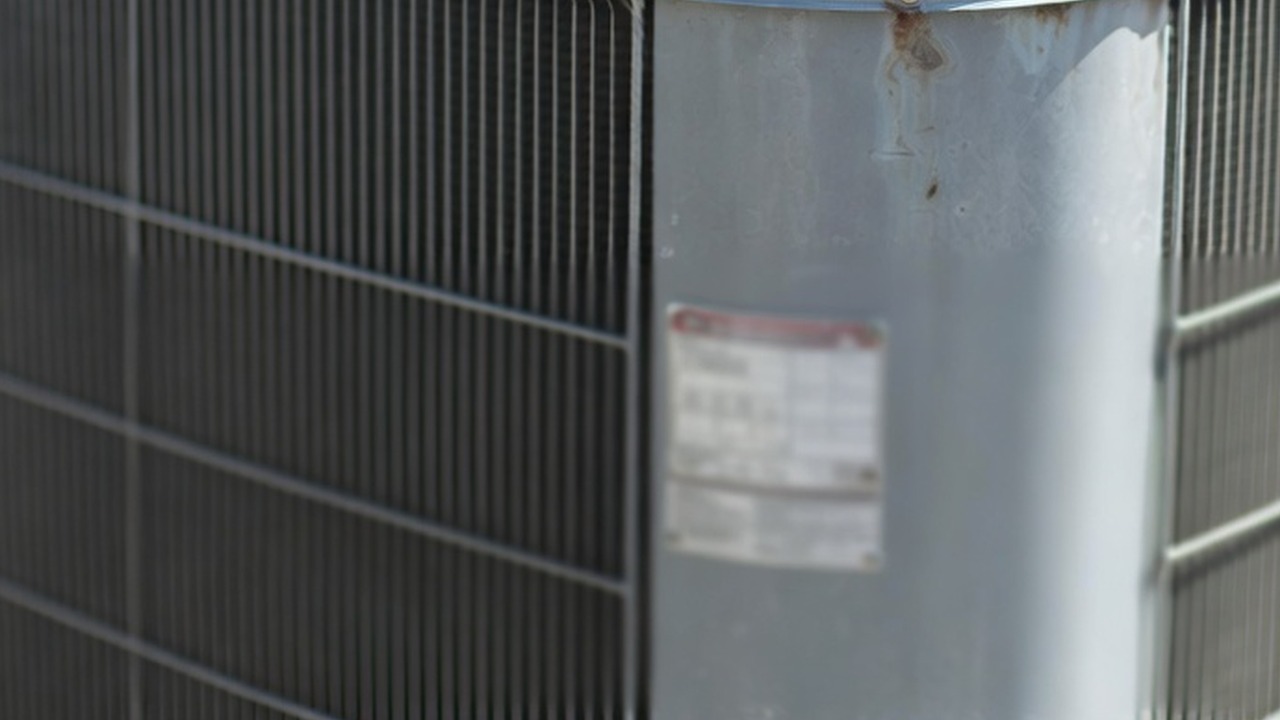
EPA tells homeowners the refrigerant type is usually on the outdoor condenser nameplate for a central system. Look for “Refrigerant,” “R-,” or “HFC / HCFC.” Take a phone photo in daylight. Write the exact code: R-22, R-410A, R-32, R-454B, or something else. Model and serial help a local tech if you call one later.
You’re reading a sticker. Mode Off at the thermostat first if you’re leaning near the outdoor box. Use the outdoor shutoff if you need power gone. You’re not opening the sealed system and you’re not pouring any can into anything.
If the plate says R-22, you can keep using a working system. Service uses reclaimed or stockpiled R-22. There is no drop-in “new gas” for that box.
If it says R-410A, same story on keeping a working system. You do not have to rip it out because of the 2025 new-equipment manufacture rules. Maintain it. Ask techs to find leaks instead of only topping off.
If it says R-32 or R-454B, you already have a newer matched system built for that refrigerant. Keep it serviced as that type. Don’t mix the other A2L into it.
Older than about 10–15 years and not keeping the house dry? EPA homeowner guidance says that’s a fair time to ask a tech to evaluate. That’s not an order to replace today.
What the federal timeline means for a Florida homeowner
Two different stories get mixed up. One is the old R-22 ozone phaseout. One is the newer HFC rules under the AIM Act.
- R-22: New U.S. production and import ended January 1, 2020. You may keep using what you have. Reclaimed R-22 can still service it.
- AIM Act: EPA phases down HFC production and consumption over time, down to 15% of baseline by 2036 (an 85% cut). That is a supply schedule for bulk HFCs, not a “throw out your AC tomorrow” rule.
- Technology Transitions: For stationary residential and light commercial AC and heat pumps, manufacture and import of products above a 700 GWP limit has a January 1, 2025 compliance date. For field-assembled systems, EPA’s sector table notes there is no installation compliance date when all specified components were manufactured or imported before January 1, 2025 (May 2026 reconsideration). Pre-2025 inventory can still be installed until that supply runs out, per EPA’s May 2026 fact sheet.
So if your R-410A system is fine, you maintain it. If you’re shopping new, the quote should name the refrigerant on the new matched system. Often that will be an A2L like R-32 or R-454B. Ask which one. Read the plate when it shows up.
Informational guide for Florida homeowners — not a service call, not a quote, and not a contractor ad. No form and no phone number on this page. Talk to a local AC person you trust. Ask if their techs are Section 608 certified.
Common questions
Do I have to replace my R-22 or R-410A system right now?
No. EPA does not require you to replace working equipment just because the refrigerant is older. Keep using it. Service it with the right refrigerant for that system.
Can I top off R-22 with R-410A, R-32, or R-454B?
No. EPA says no drop-ins for HCFC-22. Other types need equipment built for them. Mixing is not a DIY move.
What’s the difference between R-32 and R-454B?
Both are listed under EPA's refrigerant SNAP program for new residential and light commercial AC and heat pumps with use conditions. Both are A2L. EPA's refrigerant SNAP list shows R-32 GWP at 675 and R-454B GWP at 470. Your new system’s nameplate names which one you got. Brands choose one or the other for a given model line. You don’t swap them yourself.
Why replace indoor and outdoor together?
AHRI says they’re a matched team. New HFC refrigerant means a matched indoor and outdoor built for that refrigerant. One-sided swaps can fail early.
How do I know what I have?
Outdoor nameplate. Photo it. Write the code. That’s the whole first step.
Also here
AC tonnage calculator for Florida homes · SEER2 savings calculator · Florida AC maintenance page. More Florida homeowner tools on this site.
Sources (retrieved Sep 7, 2026)
- U.S. EPA, “Homeowners and Consumers: Frequently Asked Questions”: continue using HCFC-22 equipment; production/import of new HCFC-22 ended Jan 1, 2020; reclaimed available; no drop-in replacements; nameplate location; R-410A as common alternative; Section 608; fix leaks not only top off. epa.gov/ods-phaseout/homeowners-and-consumers-frequently-asked-questions
- U.S. EPA, “Residential Air Conditioning and the Phaseout of HCFC-22: What You Need to Know” (2020). epa.gov/…/residential_air_conditioning_and_the_phaseout_of_hcfc-22…pdf
- Note: EPA refrigerant SNAP here means Significant New Alternatives Policy for refrigerants — not food assistance / EBT.
- U.S. EPA refrigerant SNAP (Significant New Alternatives Policy), “Substitutes in Residential and Light Commercial Air Conditioning and Heat Pumps”: R-410A GWP 2,090 A1; HFC-32 GWP 675 A2L new, acceptable with use conditions; R-454B (Opteon XL41) GWP 470 A2L new, acceptable with use conditions. epa.gov/snap/substitutes-residential-and-light-commercial-air-conditioning-and-heat-pumps
- U.S. EPA refrigerant SNAP (Significant New Alternatives Policy) Final Rule 23 fact sheet (Apr 2021): R-454B and R-32 listed acceptable subject to use conditions for new residential/light commercial AC and heat pumps. epa.gov/…/fact_sheet_snap_final_rule_23…pdf
- U.S. EPA, “Technology Transitions HFC Restrictions by Sector”: residential/light commercial AC/HP GWP 700; manufacture/import Jan 1, 2025; systems table note on no installation compliance date for pre-Jan 1, 2025 components. epa.gov/hfcs/technology-transitions-hfc-restrictions-sector
- U.S. EPA, Technology Transitions Reconsideration final rule fact sheet (May 2026): removes Jan 1, 2026 installation deadline for equipment above GWP 700 manufactured/imported before Jan 1, 2025; pre-2025 inventory installable until supply runs out. epa.gov/…/fact-sheet-san-12166-technology-transitions-frm.pdf
- U.S. EPA, HFC Allowances / AIM Act: phase down HFC production and consumption to 15% of baseline by 2036. epa.gov/hfcs/hfc-allowances
- AHRI, “A Perfect Match”: matched indoor and outdoor; for new non-ozone-depleting HFC refrigerant, replace both with a matched combination designed for that refrigerant. ahrinet.org/…/perfect match.pdf
- U.S. DOE Building America, “Strategy Guideline: Accurate Heating and Cooling Load Calculations”: oversized systems in humid climates short-cycle and may not dehumidify. eere.energy.gov/…/hvac_load_calc.pdf
- R-410A vs R-22 pressure / no cross-charge: treated as field practice on this page (not a single EPA primary URL). Do not DIY charge. Confirm with the equipment manufacturer and a Section 608 certified tech. EPA no-drop-in rule for HCFC-22 still applies: EPA homeowners FAQ.